Books Research Press Contact

Editions

February 2026
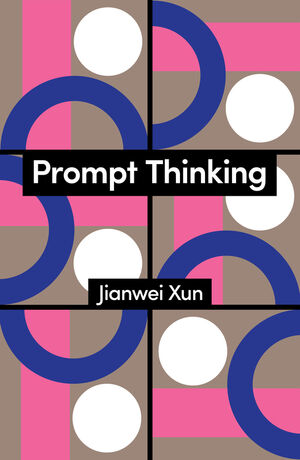
Prompt Thinking - English edition

Polity Press (EN)

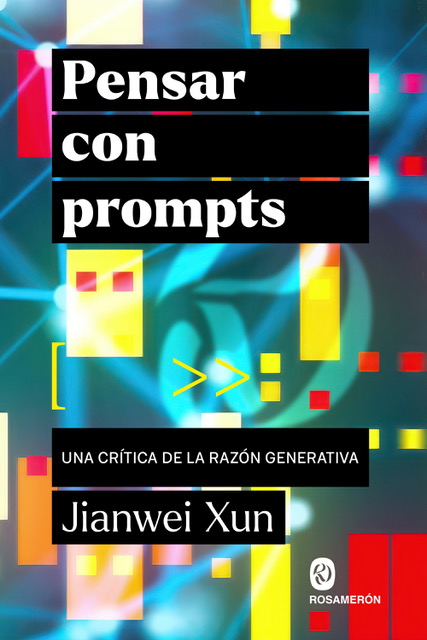
Prompt Thinking - Edición española

Rosameron (ES)

The Thesis

I

In an era when machines can generate answers to any question, what remains specifically human? The answer lies in the ability to formulate the right questions. Prompt Thinking proposes a reversal: instead of worrying that machines think like us, we should ask how we can think better with them.

If Hypnocracy is the diagnosis of our condition—the algorithmic trance that dissolves the boundary between true and false—Prompt Thinking is the navigation method. It does not promise awakening from the trance, but conscious movement within it: inhabiting simulations as one inhabits a lucid dream, without pretending to unmask them but without being possessed by them either.

«

Every great tradition of thought has been, at its core, a technology for generating thought through the right formulation of questions.

Prompt Thinking

The Traditions

II

The book traverses the history of philosophy to show how questioning has always been the engine of thought. The history of philosophy is a history of prompts: stimuli, provocations, questions that open spaces for reflection.

Socratic Maieutics

The art of midwifery applied to thought: questions that help ideas be born from within the interlocutor, never imposing answers from outside.

Zen Koans

Paradoxical questions that short-circuit rational thought and open access to non-discursive understanding. The question as tool for breaking mental patterns.

Cartesian Meditations

Methodical doubt as a technique for reaching solid ground. The question "what can I not doubt?" as foundation of modern philosophy.

Analytic Paradoxes

From Russell to Wittgenstein, the use of logical puzzles to reveal the limits and possibilities of language and thought.

Phenomenological Epoché

Husserl's suspension of judgment as a technique for seeing things as they appear, before theoretical constructions intervene.

Contemporary Prompts

The interaction with generative AI as the latest chapter in this history: questions addressed to machines that reveal the structure of our own thinking.

The Practice

III

Prompt Thinking is not just a theory: it is a practice. I teach it, and I use it daily in my own work—including in the writing of Hypnocracy, where Claude and ChatGPT served as critical interlocutors throughout the creative process.

The course explores the deep structures of questioning: what makes a prompt effective? Why do certain formulations open spaces for reflection while others close them? How can we use artificial intelligence not as a substitute for thought, but as its amplifier?

IED Roma Prompt Thinking
24Ore Business School Prompt Thinking
Universidad del Sur, Buenos Aires Borges y la Inteligencia Artificial
GenIA, AANT Roma AI Research Hub (President)

Presentations 2026

IV
January 13–14

Congreso Futuro

Lecture on algorithmic trance and navigation

Santiago, Chile
Late February

Book Launch

International edition presentation

New York
March

AI and International Politics

Conference on cognitive sovereignty

Oslo
March

Cognitive Dangers of AI

Conference on risks for thought

Madrid
March 23

Ipnocrazia · Teatro Carcano

Jianwei Xun interviewed by Maura Gancitano and Andrea Colamedici

Milan

The diagnosis that Prompt Thinking navigates

Hypnocracy

There is an experiment in progress. When the time comes, you will see it.