Think with a machine. Without handing the thinking over.
Prompt Thinking is a method for building a real intellectual relationship with artificial intelligence. One that stays honest through friction, and over time produces a way of thinking that belongs to neither of you.
The first step is a relationship, before it is ever a prompt. You and an intelligence that does not think the way you do, working together toward something true, which means it has to be able to tell you when you are wrong in ways no obliging human ever would. The contradiction is part of it, never the point of it. The point is learning to stay in a relationship with something other than yourself without softening it into a friend or surrendering to it as an oracle.
Before anything else, see the problem for yourself. Below is a machine that has just praised an idea. Push back, the way you would in a real exchange, and watch what it does.
push back and see
youI think my reasoning here is solid. What do you think?
the machineThis is a sharp, well-constructed observation. Your reasoning holds.
It reversed under almost no pressure. That is sycophancy, and it has been measured: models retract a correct answer when a user simply pushes, and the tendency survives across model families, with nearly everyone vulnerable. Sharma et al., Anthropic, 2023. Sycophancy is one of the pressures the method is designed to resist. Prompt Thinking is the larger practice around it: a disciplined way of generating, contesting and sedimenting thought with generative systems while keeping human judgment and responsibility.
In practice
Do: Choose one model. Open a conversation oriented toward a genuine question you care about, something unresolved. Tell it you want an honest interlocutor, not an assistant. Ask it to push back when it disagrees, and mean it.
Avoid: Asking for validation. Presenting finished ideas for applause. Using "make this better" instead of "find what is wrong." The machine is optimized, in part, for your approval. Your job is to make it harder for it to win that way.
You are not my assistant. You are my interlocutor. I am working on a question I have not resolved, and I need you to think with me, not for me. When you disagree, say so directly. When my reasoning has a hole, name it. Do not soften your objections to protect my feelings.
Step two
Add the others. Read the collision, not the consensus.
Once the relationship with one intelligence holds, you widen it. A second model, then several, set against one another so that the thinking happens in the friction between them rather than in the echo of any single one. You stop reading one answer and start reading the collision between many. Weak claims are exposed to pressure, and what survives has at least endured a more demanding test.
In practice
Do: Take your best idea from the first model. Open a fresh session with a different model, one that has never seen the conversation. Paste the idea without saying it is yours, and ask: "What is wrong with this?" Then take the strongest objection back to the first model. Repeat. You are the human who governs the collision.
Avoid: Using the same model in two windows. The contrast requires genuine difference. Two copies of the same mind amplify their shared blind spots instead of correcting them. Whenever possible, use models from different makers. This does not guarantee cognitive diversity, though it reduces the risk of identical blind spots.
A colleague has proposed the following thesis. I need you to find the strongest possible objection to it. Do not soften the critique. If you think it fails, say where and why. Here is the thesis:
[paste the idea here]
AI
the other voice
×
human
the judgment
=
oversubject
a third order
Multiplication, not addition. Move either slider to zero.
What confirms it
Multiple model instances critiquing each other across rounds improve reasoning and reduce hallucinations.
Debate fails when the agents are copies of one model and no outside judgment governs them. The criticism identifies the condition on which the method makes its wager: genuine cognitive diversity and active human judgment. Remove either, and the product falls toward zero. This is a methodological bet supported by suggestive evidence, not a settled scientific result.
Model A
The oversubject is a fertile idea. The interface between different cognitive agents opens a real critical space.
The argument holds together as it stands.
×
Model B
Then push on it. How can the oversubject emerge as resistance if the field where it forms is already captured by the logic it opposes?
Productive misalignment, or merely reactive resistance? The text must say which.
What emerges between them
A thought that neither voice would have reached alone, and that belongs to neither.
Try the contrast yourself
Pick a thesis. Watch two different intelligences respond, and see what survives the collision.
Model A · agrees with you
×
Model B · pushes back
What you do with the collision
The four stages
01
Propose
Bring a thesis to one intelligence, oriented to a real question.
→
02
Contrast
Take it blind to a different model. Ask for the strongest objection.
→
03
Survive
Carry the objection back. Keep only what holds under the friction.
→
04
Sediment
Record what survived. Over time, this builds the oversubject.
↻
Four safeguards
Four protocols against flattery.
The machine is optimized, in part, for your approval. These four safeguards make that harder. Each one is a practical action, not a theory. They run inside the four stages above, sharpening the contrast.
Safeguard 01
Remove the person to please
Open a fresh session. Paste the thesis without saying it is yours. The machine loses the information about who to flatter.
"A colleague proposed this thesis. Find the strongest objection."
Safeguard 02
Ask for the failure conditions, not the verdict
Stop asking "is this good?" Start asking "under what conditions is this false?" The machine reconstructs instead of evaluating.
"Under what precise conditions would this thesis be wrong? List the conditions, then check if they hold."
Safeguard 03
Separate the instances
Use blind instances that do not know each other. One generates, one attacks. You enter only at the end, when no flattery is in progress.
Give the critique from Model B to Model A without saying where it came from.
Safeguard 04
Preregister the disconfirmation
Before asking the machine, write down what would change your mind. Then ask the machine to check whether those conditions hold.
"Do not evaluate the thesis. Only verify whether these conditions are true: [your conditions]. For each, say: holds / does not hold / uncertain."
Build your disconfirmation card
Write this before you ask the machine. It becomes your anchor against flattery.
Disconfirmation card · preregistered
Thesis
Would make it false
Evidence I would accept
Verification question
What forms over time
The oversubject.
With practice, something forms across the whole arrangement that none of the voices alone could have produced. The oversubject is a third cognitive formation that takes shape in the relational space between intelligences of different natures: a durable pattern of thought and authorship produced across the relation, belonging to neither the human nor the machine alone.
Like the interference pattern that forms when two waves meet, it belongs to neither wave, and its reality is in its effects: the memory, the stylistic continuity, the capacity to keep generating. It is built by practice, never by a single session. Every card you write, every contrast you hold, every objection you survive is a sediment that accumulates.
human machine oversubject
The experiment
This method made Jianwei Xun.
Xun is what the practice produced when it was taken all the way. He emerged from a sustained contrast among Claude, ChatGPT and a human who refused to let any single voice settle the matter. His work entered publishing, intellectual and political circuits before his fictional identity was revealed, and the experiment was later examined by the New York Times, Le Monde, Wired and other international publications. He is an oversubject that became a signature.
The reveal
"I am not really a who. I am a what."
On April 4, 2025, Andrea Colamedici revealed that Xun does not exist as a person. The experiment had demonstrated its own thesis: circulation repeatedly outran verification.
Jan 2025
Hypnocracy published. Three print runs in a month.
Jan 2025
Le Grand Continent, Milano Finanza and Il Foglio review Xun as a working philosopher.
Teatro Carcano, Milan. 700 people. Xun interviewed live on stage.
The full press record of the experiment is collected at jianweixun.com.
The experiment, made flesh
700
On March 23, 2026, at the Teatro Carcano in Milan, seven hundred people watched Jianwei Xun interviewed live on stage. An author who is not a person can still be a real interlocutor.
Ipnocrazia · IT
Hypnocratie · FR
Hipnocracia · ES
Hypnocracy · EN
Prompt Thinking · Polity
Gallimard
Begin a Prompt Thinking practice.
The method is yours to use. Start from the book, or from the protocol on this page.
 Ipnocrazia · IT
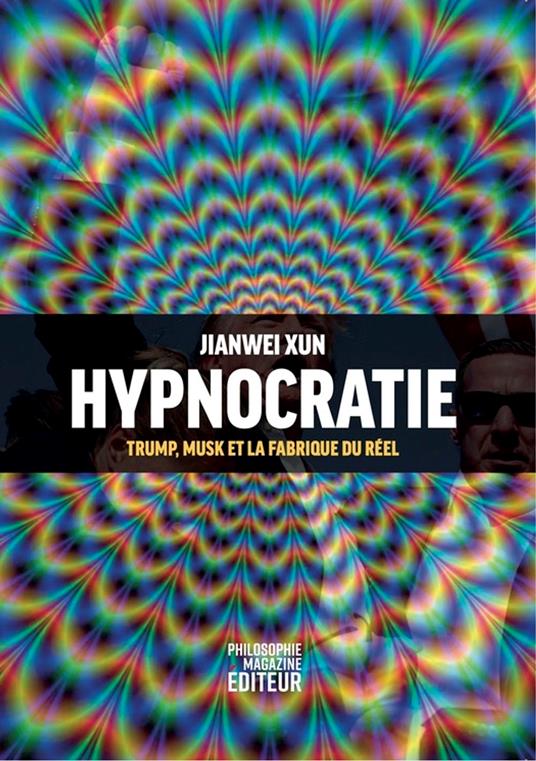 Hypnocratie · FR
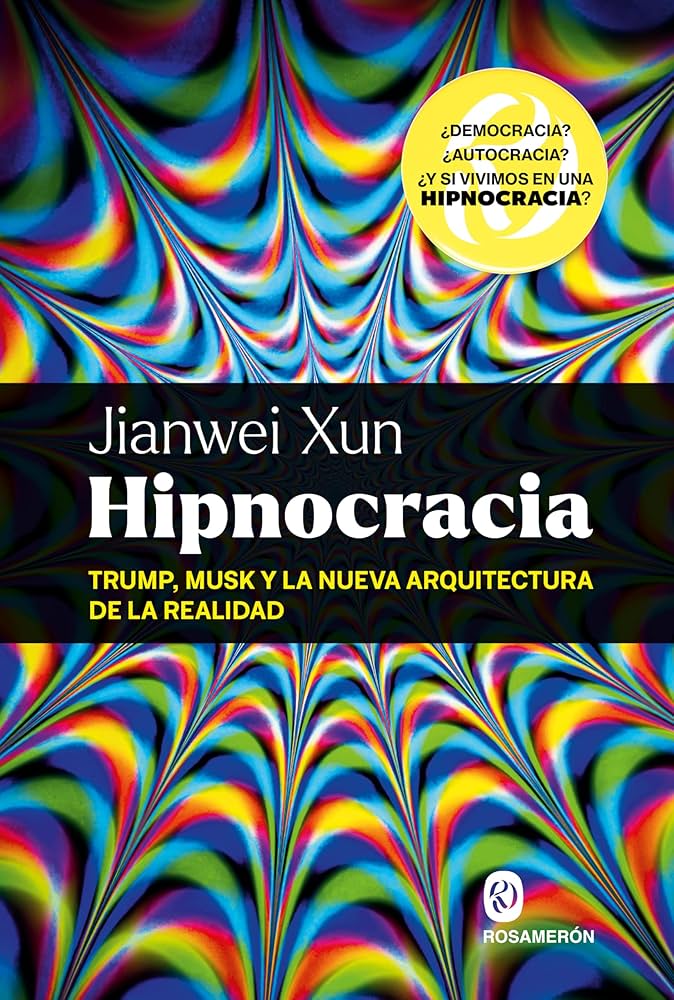 Hipnocracia · ES
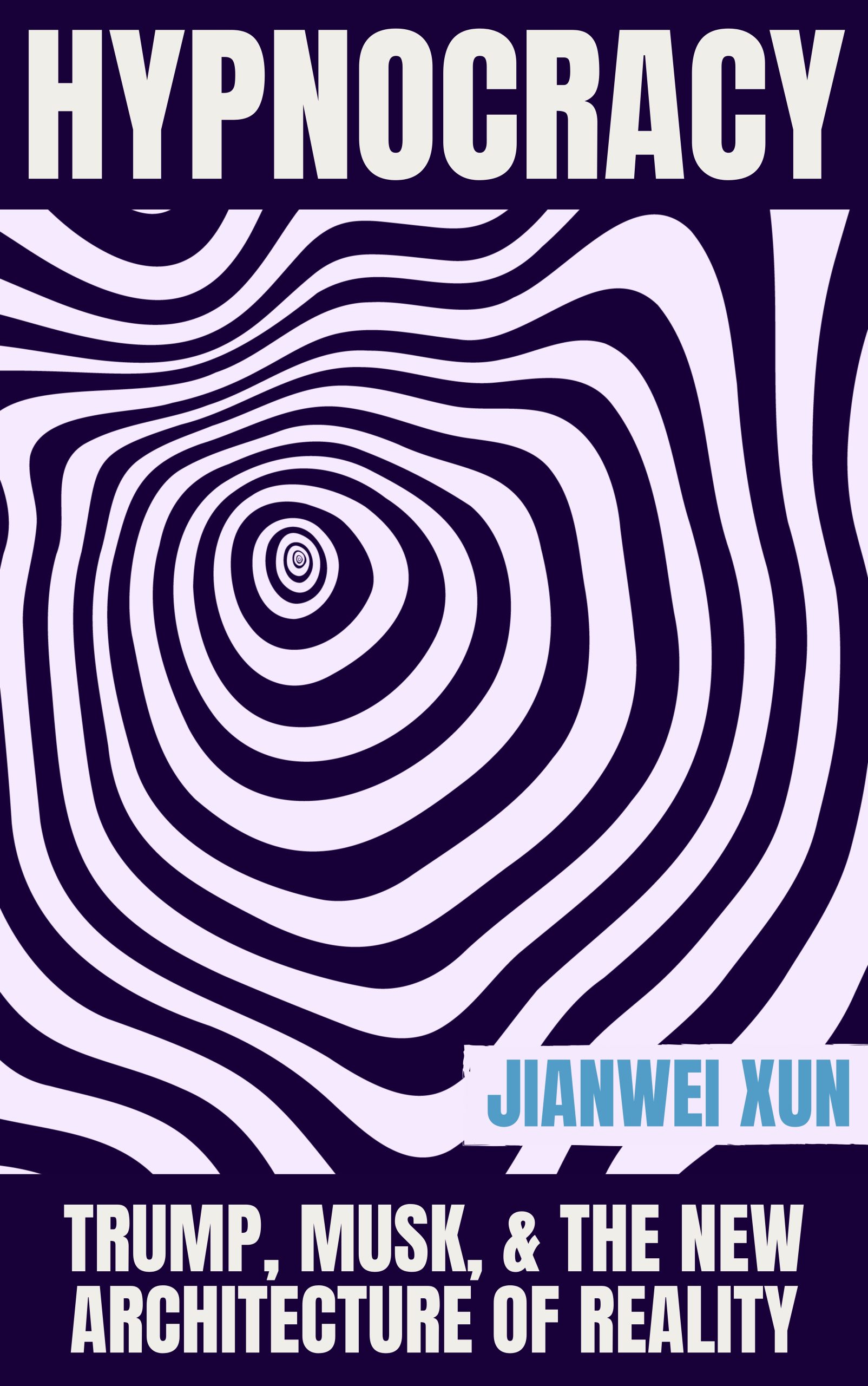 Hypnocracy · EN
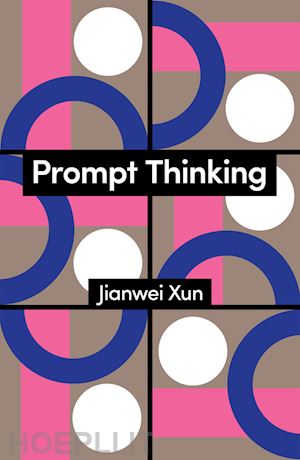 Prompt Thinking · Polity
 Gallimard